

The Taj Mahal is an ivory-white marble mausoleum complex in Agra, India, built between 1632 and 1653 by Mughal Emperor Shah Jahan to house the tomb of his favorite wife, Mumtaz Mahal. A UNESCO World Heritage Site (designated 1983) and one of the New Seven Wonders of the World, it is considered the pinnacle of Mughal architecture, featuring symmetric design, delicate pietra dura inlays, and a large dome.
- Location: Agra, Uttar Pradesh, India, on the southern bank of the Yamuna River.
- Purpose: A monument of “undying love” built by Shah Jahan in memory of Mumtaz Mahal, who died during childbirth in 1631.
- Construction: Took over 20 years to build, employing thousands of artisans and workers.
- Architecture: It represents a blend of Persian, Islamic, and Indian styles, with the central structure made of white marble on a high, red sandstone base.
- Key Features: A large onion-shaped dome, four flanking minarets, and intricate floral and geometric inlays using semi-precious stones (parchin kari).
- Appearance: The marble seems to change color depending on the light—pinkish in the morning, milky white in the evening, and golden in the moonlight.
- The Complex: In addition to the main mausoleum, it includes a mosque and a guest house, set within a 17-hectare Persian-style garden.
- Status: It is managed by the Archaeological Survey of India (ASI) and is a top tourist destination, attracting millions of visitors annually
Visitor Information
- Entry: Tickets can be booked on the official Taj Mahal website.
- Security: Tight security exists; items like food, electronics, and sharp objects are restricted, and visitors must cover or remove their shoes before entering the mausoleum.
- Timing: The Taj Mahal is open for sunrise to sunset, with specialized night viewing permitted during full moon nights.
The structure is considered the premier example of Mughal architecture in India.
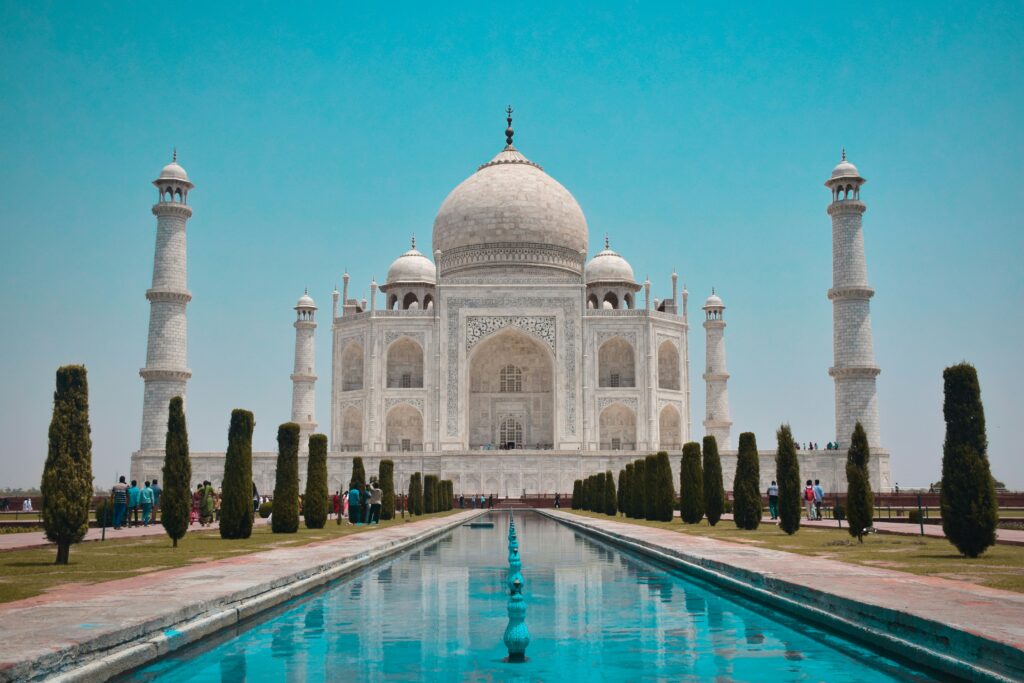
Welcome to India, a kaleidoscopic sensory explosion where ancient spirituality meets high-octane modern life. Experience the architectural perfection of the Taj Mahal in Agra, then lose yourself in the chaotic, colorful bazaars of Old Delhi.
In the north, the snow-capped Himalayas offer serene retreats, while the desert forts of Rajasthan glow with royal history. To the south, drift through the tranquil backwaters of Kerala or relax on the golden sands of Goa. From the spicy aromas of street-side chaat to the rhythmic chants along the Ganges, India isn’t just a destination—it’s an unforgettable soul-stirring adventure.
Regional Highlights
- The Golden Triangle: A classic route covering Delhi, Agra, and the “Pink City” of Jaipur.
- Varanasi: One of the world’s oldest living cities, famous for its sacred river rituals.
- Mumbai: The bustling “City of Dreams,” home to Bollywood and colonial landmarks.
- Hampi: Surreal landscapes filled with the boulder-strewn ruins of a lost empire.
| Aspect | What to Expect |
| Cuisine | Bold spices, regional curries, and incredible vegetarian diversity. |
| Transport | Iconic train journeys and nimble auto-rickshaws for city hops. |
| Best Time | October to March (cooler months) is ideal for most of the country. |
Traveler’s Note: India is vast and intense. Instead of rushing, pick one region to explore deeply—the “slow travel” approach rewards you with much richer cultural connections.